
8.20.2025
Focus on . . . KELLY FORDON
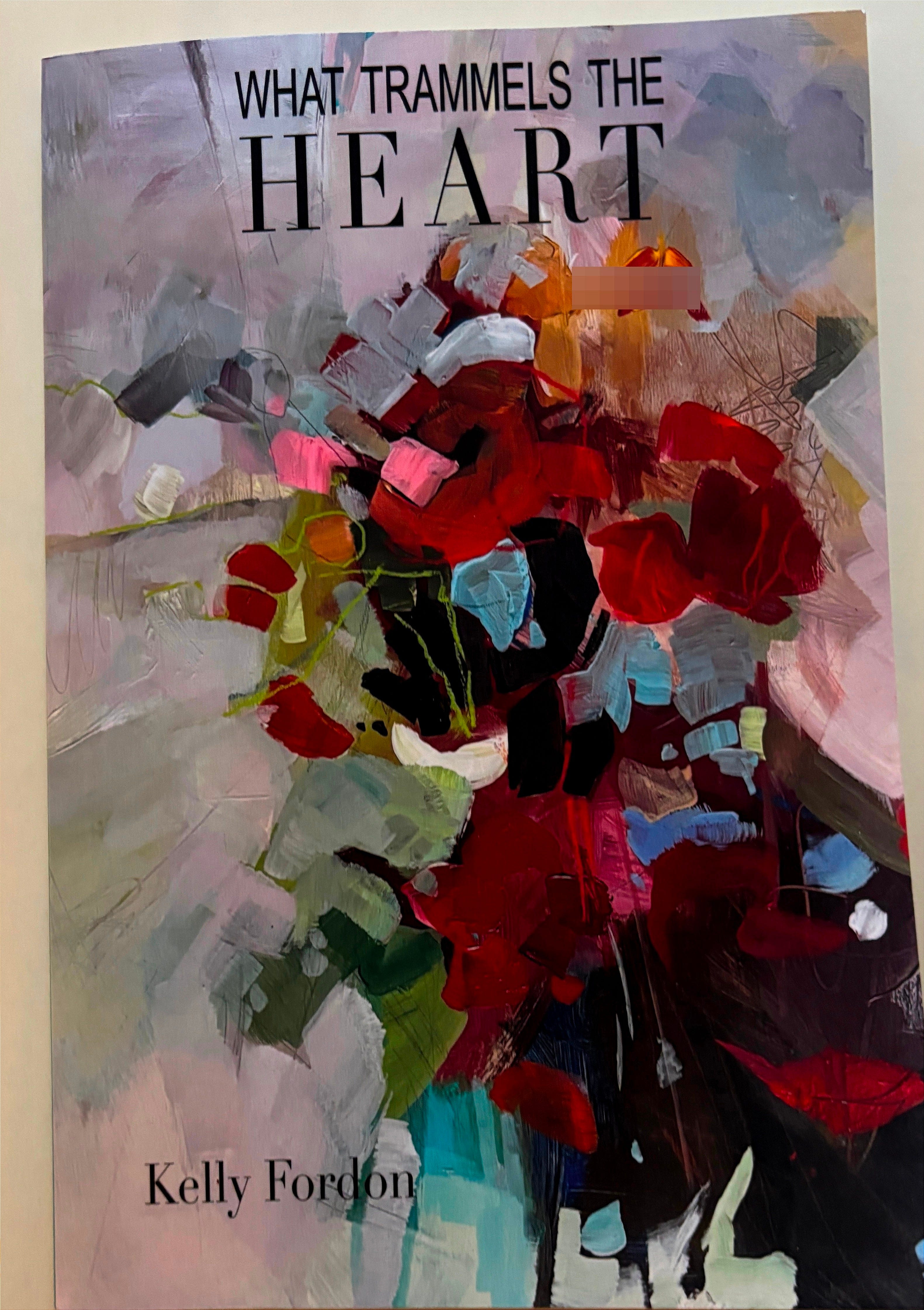
Last week’s mail brought a copy of What Trammels the Heart, the second full-length poetry collection by .1
Here on Substack, Fordon hosts the Let’s Deconstruct a Story podcast and writes My Personal Favorite, her poetry blog. That dual focus makes perfect sense—she is an accomplished writer of both fiction and poetry. She’s also a teaching artist, offering workshops online as well as through Springfed Arts in the Detroit metropolitan area.
The poems in Fordon’s new collection, published last spring, are arranged in three sections that variously witness, indict, grieve, and seek redemption from sexual trauma.
A theme of the first section is sexual abuse of children:
               . . . We still had
     Red Rover and the long climb up
               onto the roof of the church where
     we sang, I’m on top of the world,
               and lucky we were to believe it.

                              (“Close Call at OLV 1981”)
In the second section, the hybrid prose poem “Mistake” narrates a sexual assault carried out with impunity against the poem’s speaker, who “made the bad Catholic girl decision to go up to a bedroom with a boy [she] liked”:
     I told no one.

     I didn’t even consider telling anyone because

     I had asked for it.
Sound familiar? Why wouldn’t it? Vulnerable adolescent girls still pay every day for such “mistakes.” And it was only seven years ago that the media made a spectacle of Christine Blasey Ford’s testimony during the confirmation hearings for Brett Kavanaugh, now a Supreme Court justice.2
As it happens, Kelly Fordon went to high school in Washington, DC, and was a contemporary of Christine Blasey Ford. In a June 2025 interview, Fordon talked about her own experience of sexual assault—“eerily similar,” she said, to the incident Ford reported.
What Trammels the Heart is not a memoir, neither true confession nor autofiction. It’s true that the poems are “about” sexual trauma. As poems, however, they’re primarily “about” language—and the language, though never waving for attention, is exquisite.
In the same interview, Fordon was asked what she hopes readers will take away from the book.
“I hope readers feel like their own voices are important and that the rest of us want to hear from them,” she said. “Every single story is crucial. You are not alone. The rest of us are rooting for you. You matter.”
In that spirit, I’ll share a poem from my early days on Substack.
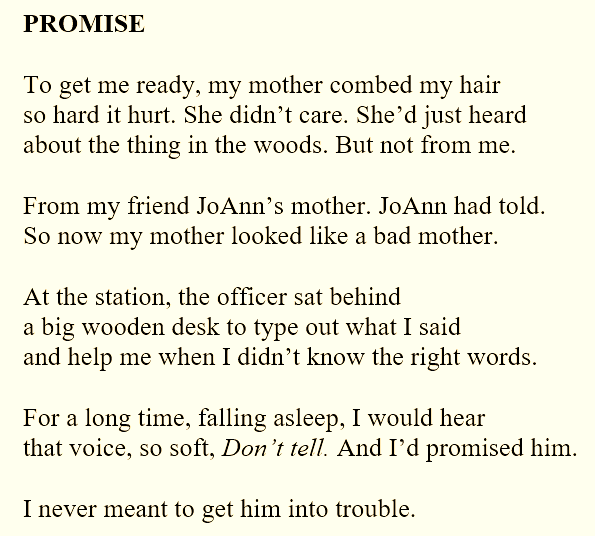
As one reader put it when this poem first appeared, “Why do so many of us have the thing in the woods?”
I dislike the term “full-length poetry collection.” To my mind, if something is finished, it has reached its full length. But if people find it useful to make a distinction between a chapbook and a longer book of poetry, I guess we’re stuck with that term. Meanwhile, I’m annoyed by its underlying assumptions, cousins to the belief that writing short stories is practice for writing a novel, or that a novella could be a novel if only it weren’t so darned short.
You can believe every word of Christine Blasey Ford’s story and still be slack-jawed at the cynicism of the Senate Democrats who trotted her out at the eleventh hour. You can question Ford’s account and still be repelled by the sexist behavior of the Senate Republicans, including some relics who trashed Anita Hill’s character in 1991. In 2018, both parties shamelessly made Ford a pawn in the hyperpartisan circus leading up to the midterms.
Coincidentally, my mail held the same book. We are like-minded!
thank you for wonderful review and shared poem